
Window of Tolerance
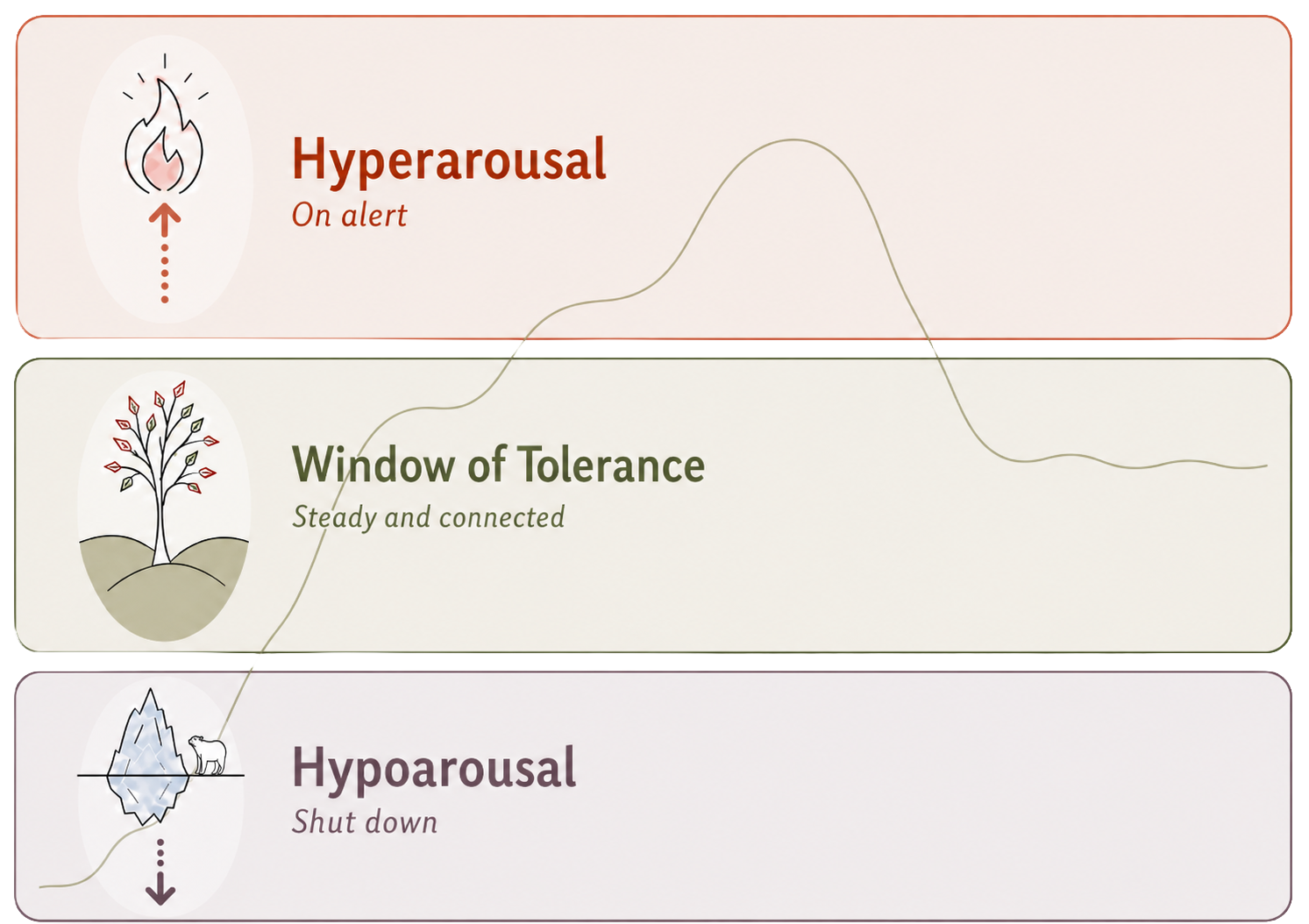
Sometimes, our reactions can feel bigger than the moment itself.
A small inconvenience may suddenly feel overwhelming. A hard conversation may leave us feeling panicked, shut down, or disconnected. Other times, we may feel so drained that even a simple tasks can feel like too much.
These responses are not signs that something is “wrong” with you. Rather, they are often signs that your nervous system is trying to protect you.
The Window of Tolerance was coined by Dr. Dan Siegel, a psychotherapist, who describes this space as the place where your mind and body feel most able to cope. When you are within your window, you may still feel stress, sadness, anger, or discomfort, but those feelings feel more manageable. You can think clearly, stay connected to yourself, and choose how you respond rather than react instinctively.
When you are pushed outside of your window, your nervous system may move into survival mode.
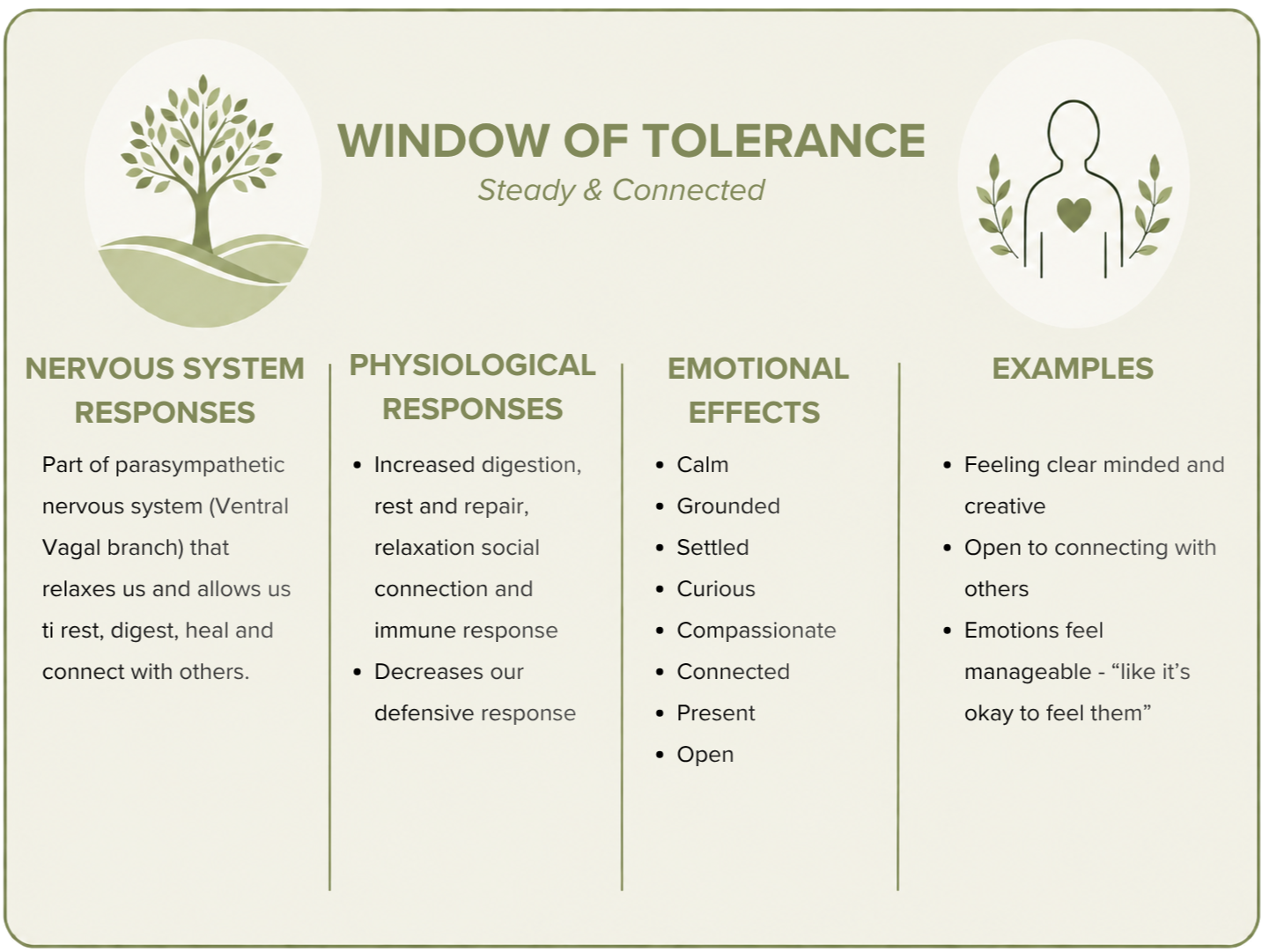
WHEN WE ARE INSIDE OUR WINDOW
When we’re inside our Window of Tolerance, this is the space where you feel most like yourself.
Being inside your window does not mean you feel calm all the time. Rather, it means your emotions feel possible and manageable to be with.
This is often where healing, reflection, and meaningful change can happen.
WHEN WE GO ABOVE OUR WINDOW
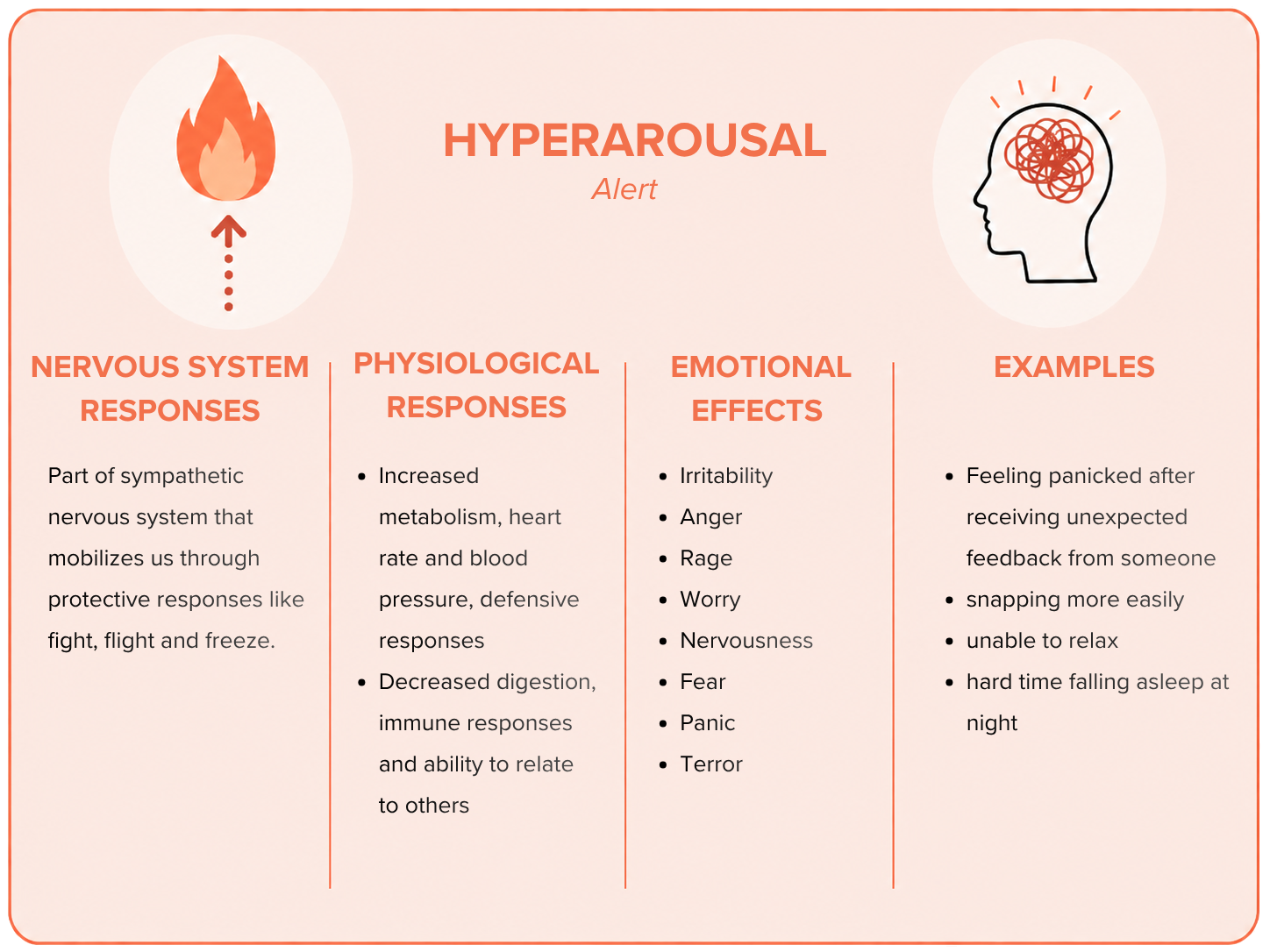
Sometimes, stress or emotional pain can push your nervous system into a state of high alert. This is often called hyperarousal.
In this state, your body may act as though there is danger, even if part of you knows you’re safe. Your heart may race, your breathing may change, and it can become harder to think clearly.
If we think of our computer as an example, this is as though there are a lot of windows popping up on our computer trying to do multiple things at once.
WHEN WE GO BELOW OUR WINDOW
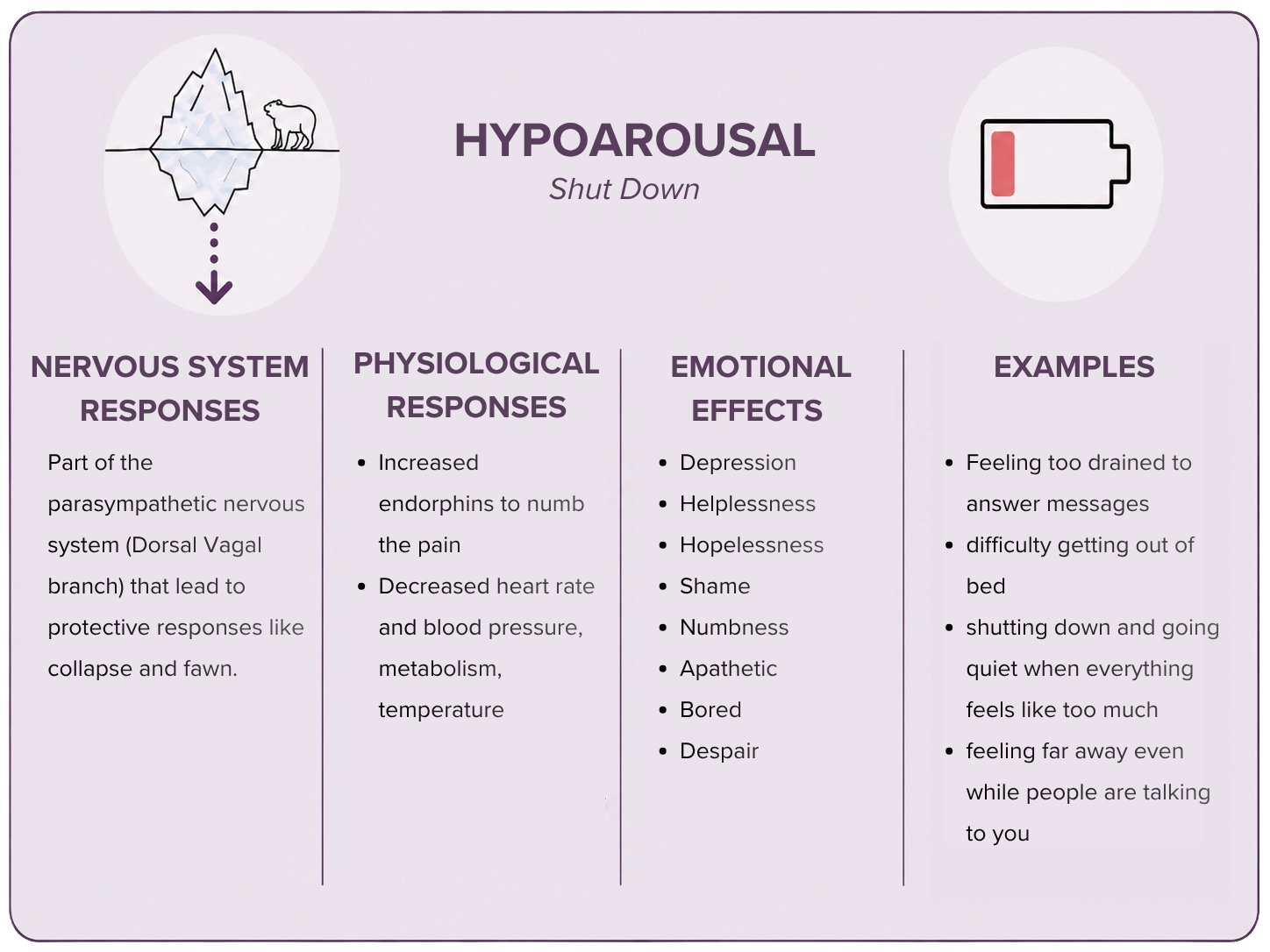
Other times, when something feels like too much for too long, your nervous system may move into shutdown. This is known as hypoarousal.
This is not laziness or weakness but rather, another protective response. Your body may be trying to conserve energy, block out pain, or help you get through something that feels too much for our capacity to cope with and integrate.
If we go back to our computer analogy, this might look like the computer crashing and shutting off from having too many windows opened at the same time.
WHY OUR WINDOW CAN SHRINK
For some people, the window of tolerance can become narrower over time.
This can happen when you have experienced trauma, chronic stress, ongoing anxiety, relational pain, grief, or long periods of having to “just get through.”
When your window feels smaller, you may notice that you become overwhelmed more quickly, shut down more easily, or move back and forth between feeling on edge and feeling completely drained.
This can make everyday life feel harder than it “should.” It can also affect relationships, work, decision-making, self-esteem, and your ability to feel connected to yourself.
HOW THERAPY CAN SUPPORT OUR WINDOW
Therapy can help you better understand your nervous system and the ways it has been trying to protect you.
The goal is not to never feel anxious, sad, angry, or overwhelmed. The goal is to build more capacity to notice what is happening, understand your patterns, and gently find your way back to steadiness.
Over time, therapy can support you in:
Recognizing your early signs of overwhelm or shutdown
Understanding what activates your nervous system
Learning tools to help you feel more grounded
Building more emotional capacity
Processing experiences that may still be living in the body
Creating more space between what happens and how you respond
In other words, therapy can help widen your window, so more of life begins to feel manageable. The great news is that our nervous system and brain is wired for change.
You don’t have to navigate feeling stuck, alone, overwhelmed or drained alone. Reaching out for support, practicing and gaining a deeper understanding of your body’s signals can help widen your window to have more capacity, more steadiness, and more room to be with what life brings.